Three in the Morning
Why the fear feels bigger at night, and what to do with a body that will not settle
Steve Stewart · August 4, 2026 · 6 min read
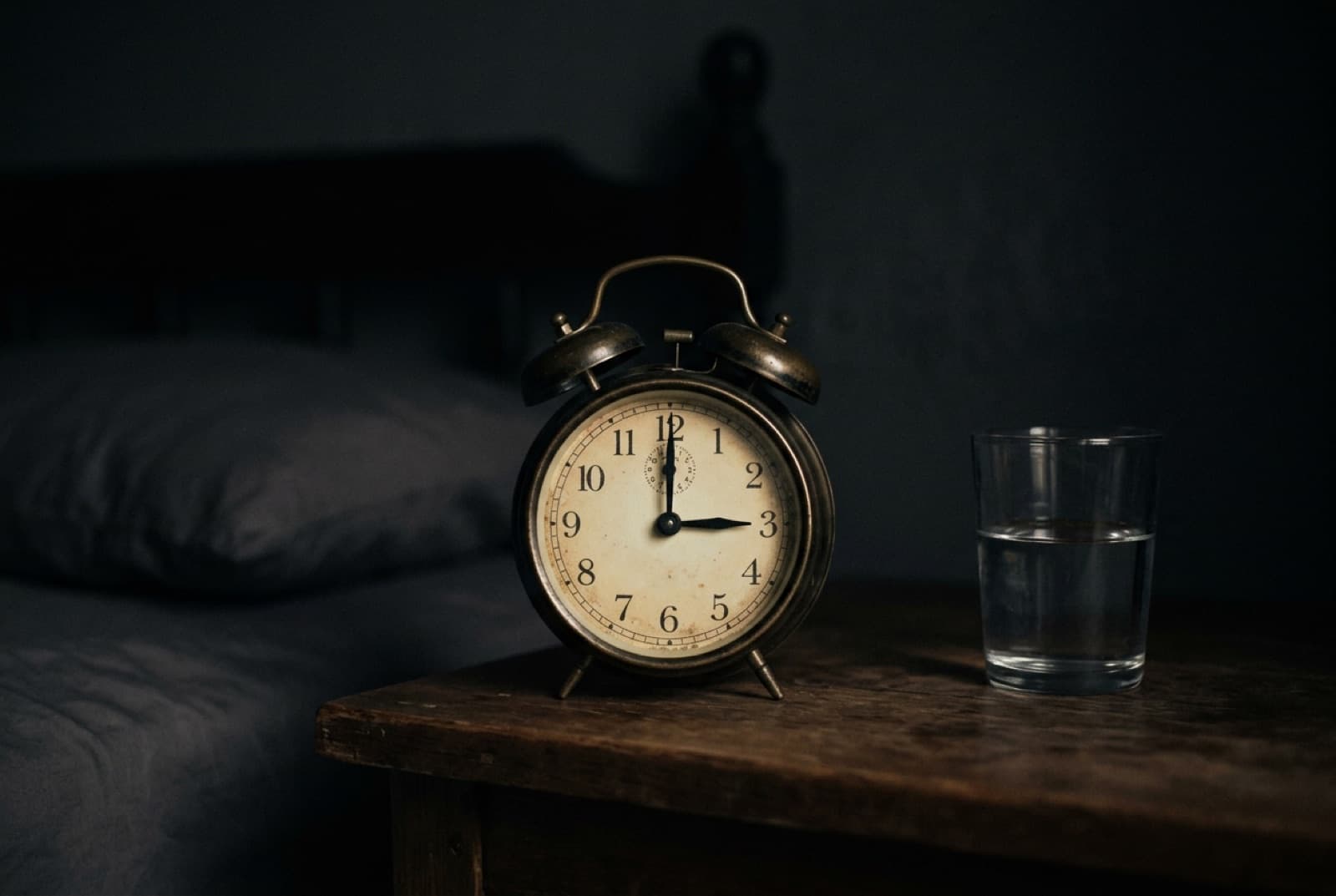
You wake up without knowing why.
Nothing woke you. No noise, no dream you can remember. You are just awake, and you are awake all the way, and the room is dark and quiet and your mind is already running at full speed.
And whatever you have been carrying is right there waiting for you.
The conversation you have to have on Thursday. The number in the account. The test results. The kid you cannot reach. The thing you said six years ago that you still think about. It arrives with a weight it does not have in daylight, and it arrives certain. Not as a worry. As a verdict.
At three in the morning it is not a hard situation. It is the end of everything.
Then the sun comes up, and you drink coffee, and by ten o'clock the same problem is just a problem again. Hard, but sized. Something you can work.
Same facts. Same person. Different hour.
That difference is worth paying attention to, because it tells you something true about what is actually happening.
The Facts Did Not Change, So What Did
If the situation is identical at three and at ten, then the situation is not what is producing the terror.
Something between the event and your response is assigning the meaning. That is always the case. It is just easier to see at night, because at night everything that normally competes for your attention is gone.
During the day, you have got buffers. Work. Noise. People. Tasks. Things to look at and things to answer. Those buffers do not fix the belief underneath your fear. They just keep you too busy to hear it.
At three in the morning there is no buffer. There is nothing between you and what you actually believe.
So the night does not create the fear. It exposes it. That is a hard gift, and it is still a gift, because you cannot retrain what you cannot hear.
The Belief Underneath
For most people who wake up at three, the belief is some version of this: if I do not solve this right now, it will not get solved.
That is why your mind will not stop. It is not being cruel. It thinks it is working. It genuinely believes it has been left alone with something that only it can hold, and so it turns the problem over and over, looking for the angle that makes it safe.
Notice what that belief assumes. It assumes you are the last line of defense. It assumes that if you sleep, the thing goes unguarded. It assumes, underneath everything, that you are alone with it.
That belief is often trained early. It gets trained in homes where a child had to watch for trouble. It gets trained in seasons where nobody was coming to help, and the only person who ever handled it was you, and you handled it, and it worked. Your mind learned that vigilance is what keeps the roof on.
It helped you once. That is worth honoring. It is not helping you at three in the morning.
Your body is not failing at faith. It is doing exactly what it was trained to do, at the hour when nothing is left to distract it.
The Truer Belief
You are not the last line of defense. You never were.
God does not sleep. That is not a comfort slogan to put on a wall. It is a load-bearing fact about who is actually keeping watch, and it means that your staying awake is not what is holding the situation together.
Read that slowly. Your vigilance is not what is holding it together. It was never what was holding it together.
Something can be genuinely serious and genuinely not yours to carry alone at three in the morning. Both are true. The problem is real. The size the night gives it is not.
One Aligned Action
Do not try to win the argument with your mind at three in the morning. You will lose. Your body is flooded and your judgment is not trustworthy at that hour, and the goal is not to solve the thing. The goal is to interrupt the default.
So when you wake up, do three moves. Out loud, if you can, even at a whisper.
Say the size of it. This is a hard conversation. This is one bill. This is a hard season, not the end of my life. Name the actual size of the actual thing.
Say who is awake. God is awake right now, and He is not worried, and I am not the one holding this together.
Then give it back and put it down until a reasonable hour. I will pick this up at eight. It has an appointment. It does not get the whole night.
The first time you do this, your body will not believe you. Say it anyway. You are not lying to yourself. You are interrupting something that has been lying to you about the size of the room.
And in the daylight, when you are steady, do the part that actually changes things. Ask the better question. Not why am I like this. Ask what belief was running last night, and where did it learn to run.
That question turns a bad night into a formation moment. It keeps curiosity alive where shame would shut everything down. And it gives God something to work with.
Pause Point
- What is the thought that shows up first when you wake up in the dark?
- What would have to be true for that thought to make sense?
- Who taught you, early, that you had to keep watch by yourself?
Get the next article
Short writing on belief and formation, straight to your inbox.